
The questions below cover what people ask most about Brevard County court records. Each one is short. Each answer cites the office or statute behind it and links to the page that goes deeper.
Where do I search Brevard County court records online?
Start at the Clerk's case search page and use BECA, the Brevard Electronic Court Application. BECA is the official online window into Brevard court records. The Clerk notes that BECA runs under Florida Supreme Court Administrative Order AOSC14-19 and that it replaced the older eFACTS tool. Open the splash page at BECA, accept the disclaimer, then pick General Public Court Records Search or Subscriber Court Records Search. Records shown there are for information only. They are not certified copies.
Is there a separate district clerk in Brevard County?
No. Florida does not use the Texas-style split of district clerk and county clerk. Brevard has one unified Clerk of the Circuit Court & Comptroller. That office is clerk of the circuit and county courts, clerk to the Board of County Commissioners, county recorder, and county finance officer. So court files, official records, marriage licenses, and most public records requests all route through the same Clerk. There is no second office to track down for routine court-file work.
Who is the current Brevard Clerk of Court?
Rachel M. Sadoff is the Brevard County Clerk of the Circuit Court & Comptroller. Her official bio says she began work in the Clerk's office in 1997, later ran Viera branch operations, and was elected without opposition in 2020. She became Brevard's first female Clerk of Circuit Court and Comptroller on January 5, 2021. Sign correspondence and certified-copy requests to that office and use the Clerk's mailing addresses page for the right intake unit.
How do I request certified copies in Brevard County?
Use the Clerk's public records request process, not BECA screenshots. The Clerk accepts requests online through the NextRequest portal, by email at PublicRecordsRequests@brevardclerk.us, by phone at (321) 637-2004, by mail to P.O. Box 999, Titusville, FL 32781-0999, or in person at any branch. Posted fees are $1.00 per page for copies and $2.00 per document for certification. Certified copies are needed for legal use. Plain online copies will not be accepted by most courts.
Are BECA records official court records?
No. BECA itself says its online court records are informational and do not count as official court records. If a case detail looks wrong or is missing, the Clerk says to contact the Clerk's office directly. For certified or official copies, use the Research and Copy Request Center, file a public records request, or visit a Clerk branch. Some images are blocked by statute, rule, or court order, so what shows online may not be the full file.
Why can't I see a case or document online?
Files can be hidden for many reasons. The case may be sealed or confidential. It may be a juvenile case or fall under family, probate, or guardianship rules that limit remote access. It may be too new to index, or it may sit with another agency. Florida's electronic access matrix sets what general public users can see versus subscribers. The Clerk's Official Records View page also notes restricted image categories. See court records for the full access map.
How do I search official records like deeds or liens?
Use the Clerk's Official Records page through the Clerk of the Circuit Court & Comptroller. Index data goes back to 1/1/1981. Images are posted, where the statute allows, from 1/1/1981 to the present. Official Records cover deeds, mortgages, liens, contracts, affidavits, plats, surveys, judgments, military discharges, and declarations of domicile. The Clerk also recommends running every name with each spelling you know, since older records were keyed by hand.
Statute note. Florida's public records framework sits in Chapter 119 of the Florida Statutes. Inspection and copying rights are set out in F.S. 119.07, and court-file specific rules sit in F.S. 119.0714. General exemptions for sensitive personal data are in F.S. 119.071. Read the full Chapter 119 index on the Florida Legislature site.
How do I find someone in the Brevard County Jail?
Use the official BCSO inmate search. You can search by From Date, To Date, Last Name, First Name, Subject Number, or Booking Number. Booking numbers must follow the YYYY-NNNNNNNN format. Results show Booking #, Name, DOB, Booking Date, and Released status. For current status, call Inmate Information and Bonds at (321) 690-1500 ext. 0. For a deeper walk-through of fields and filters, see inmate records.
What does a Brevard inmate profile show?
A sample profile from the BCSO search showed subject info (name, subject number, date of birth, age, gender, race, height, weight, address), booking date, released status, mugshot or photo status, bonds, the charge table, case number, docket number, court date, judge, arresting agency, and booking history. It did not show pod or tank location, or any private medical or security flags. See inmate records for the full field map and search tips.
Does an arrest mean a conviction?
No. The BCSO inmate search has a clear disclaimer that an arrest does not mean the inmate has been convicted, and that all subjects are considered innocent unless proven guilty in court. The database is informational, changes quickly, may have factual errors, and should not be used for any legal action. For the difference between charges and convictions, and for what arrest data is public, see criminal records.
How do I bond someone out of the Brevard County Jail?
The BCSO Jail FAQ says full bond can be paid by cashier's check, certified check, or money order made out to the Brevard County Clerk of Courts. Cash and credit card payments go through TouchPay, either online, by phone at 1-866-204-1603, or at the Jail Complex for in-person paperwork. Whoever pays needs the inmate's CID number and full name. For more on bond types, holds, and release timing, see inmate records.
How do I get notified when a Brevard inmate is released?
Use Florida VINELink to set up custody alerts where the system supports the facility. VINELink is a notification tool, not a court-record database. For urgent or near-term release status, call the jail directly. State prison release data lives in the FDC search, and federal custody status lives in the BOP inmate locator. The released inmates page maps all three.
Where do I search Brevard County warrants?
Start at the BCSO Offender & Warrant Search hub. It links out to FDLE Wanted Persons, the FDLE sex offender search, the National Sex Offender Public Search, and BCSO offender alerts. BCSO warns not to rely on any of those databases for legal action and to confirm any hit with the agency that issued the warrant. Run BECA too for related criminal dockets and missed-court events. See warrant records for the full walkthrough.
How do I apply for a Brevard County marriage license?
Both applicants must apply in person, together, at any Brevard Clerk office. Bring a state-issued photo ID, military ID, or passport, and know both Social Security numbers. Prior-married applicants need the exact date of divorce, death, or annulment. The fee is $86, or $61 with a registered Florida premarital course. There is a three-day waiting period unless the course, hardship, or nonresident status waives it. Full steps are on the marriage and divorce records page.
How long is a Brevard marriage license valid?
The Clerk says a Florida marriage license must be used within 60 days from its effective date. The person who solemnizes the marriage has to certify and file the license with the Clerk within 10 days after the ceremony. The license is valid only in Florida, even when issued in Brevard. For replacements, certified copies, and overseas use, follow the steps on marriage and divorce records.
Where are Brevard County divorce records?
Divorce, or dissolution of marriage, files are family court records kept by the Clerk. Search them through BECA or through a public records request. Because family files often contain confidential data such as financial affidavits or details about minor children, some images are restricted from remote viewing. Certified copies should be ordered from the Clerk, not from any third-party site. The marriage and divorce records page lists fees, ID rules, and request options.
How does probate work in Brevard County?
Florida does not use a separate probate court. Probate is a division of the circuit court, and the Clerk handles filings. The Clerk's probate page lists three tracks: Disposition of Personal Property without Administration for very small estates, Summary Administration for estates under $75,000 or where the death was at least two years ago, and Formal Administration for larger estates or any case that needs a personal representative. Each track has its own forms and fees. See probate records.
Do I need an attorney for Brevard County probate?
It depends on the track. The Clerk says you do not have to use an attorney to file Disposition without Administration or Summary Administration. The Clerk also cannot give legal advice or help complete forms. Formal Administration requires an attorney. People without counsel are pointed to the Florida Bar Lawyer Referral Service at (800) 342-8011. The probate records page covers forms, filing fees, and what each track does.
How do I pay or contest a Brevard County traffic ticket?
Civil traffic must be handled within 30 days of the ticket date. The Clerk's traffic page accepts payment by mail, internet, Western Union, Amscot, or in person. Payment methods include cash, check, cashier's check, certified check, money order, or credit card. Do not mail cash. To contest, ask for a hearing and watch the court date. Criminal traffic, such as DUI, requires a court appearance. See traffic court records for full details.
How do I seal or expunge a Florida criminal record?
FDLE says the rules sit in F.S. 943.0585 and F.S. 943.059. The first step is to apply to FDLE for a Certificate of Eligibility, then file a petition with the court that handled the case. The certificate does not promise relief. The court has final say. FDLE notes processing can run over 12 weeks. Read the full FDLE seal and expunge FAQ. For Brevard steps and forms, see criminal records.
Where can self-represented litigants get help in Brevard?
Three places help. The Eighteenth Circuit has a self-help and pro se page. The Clerk offers Pro Se appointments for family law at Viera and Melbourne, though staff cannot give legal advice under F.S. 28.215. Brevard County Legal Aid serves financially eligible clients in family, housing, domestic violence, guardianship, consumer, bankruptcy, and landlord-tenant matters. Statewide forms live at Florida Law Help.
Who is the State Attorney for Brevard?
William Scheiner is the State Attorney for the Eighteenth Judicial Circuit, which covers Brevard and Seminole. The office is at 2725 Judge Fran Jamieson Way, Building D, Viera, FL 32940, with phone (321) 617-7510. The State Attorney prosecutes criminal cases and also runs victim services, media communications, public records intake, and defense-resource information. See the official site at sa18.org. For broader criminal case context, see criminal records.
Who is the Brevard Public Defender?
Blaise Trettis is the Public Defender for the Eighteenth Judicial Circuit, also serving Brevard and Seminole. The court must run a financial inquiry and appoint the Public Defender before that office can represent a defendant. The client information page notes a $50 application fee, payable to the Clerk within seven days of appointment. The Public Defender does not take walk-ins. For arrest data, see criminal records.
Sources Behind These Answers
Three official pages back up most of the answers above. The Clerk's Official Records page lists index and image coverage, privacy notices, and the disclaimers that apply to deeds, liens, and judgments.
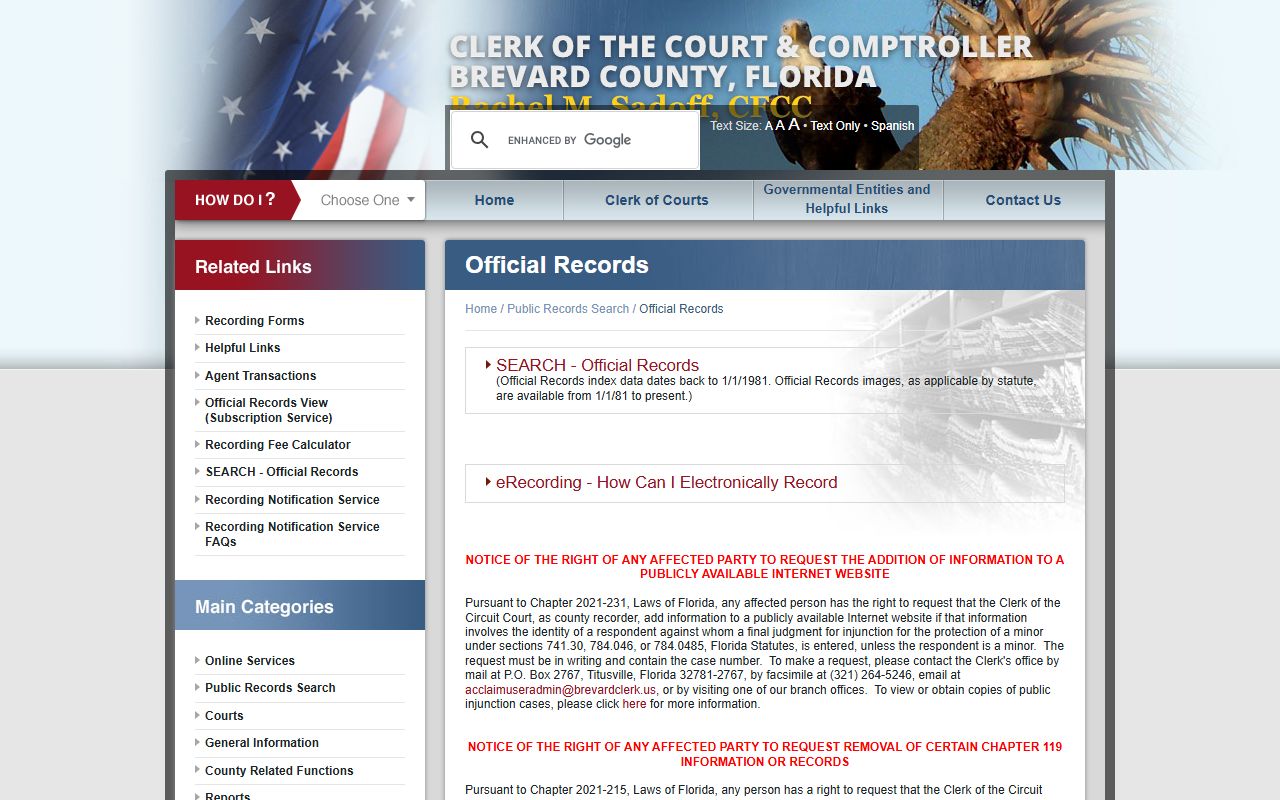
That page is the source for the Q on official records search and for the warning that BECA images do not equal certified copies.
For self-represented family-law help, the Clerk runs a Pro Se appointment system. See the Clerk's Pro Se Services intake page for the booking process at Viera and Melbourne.
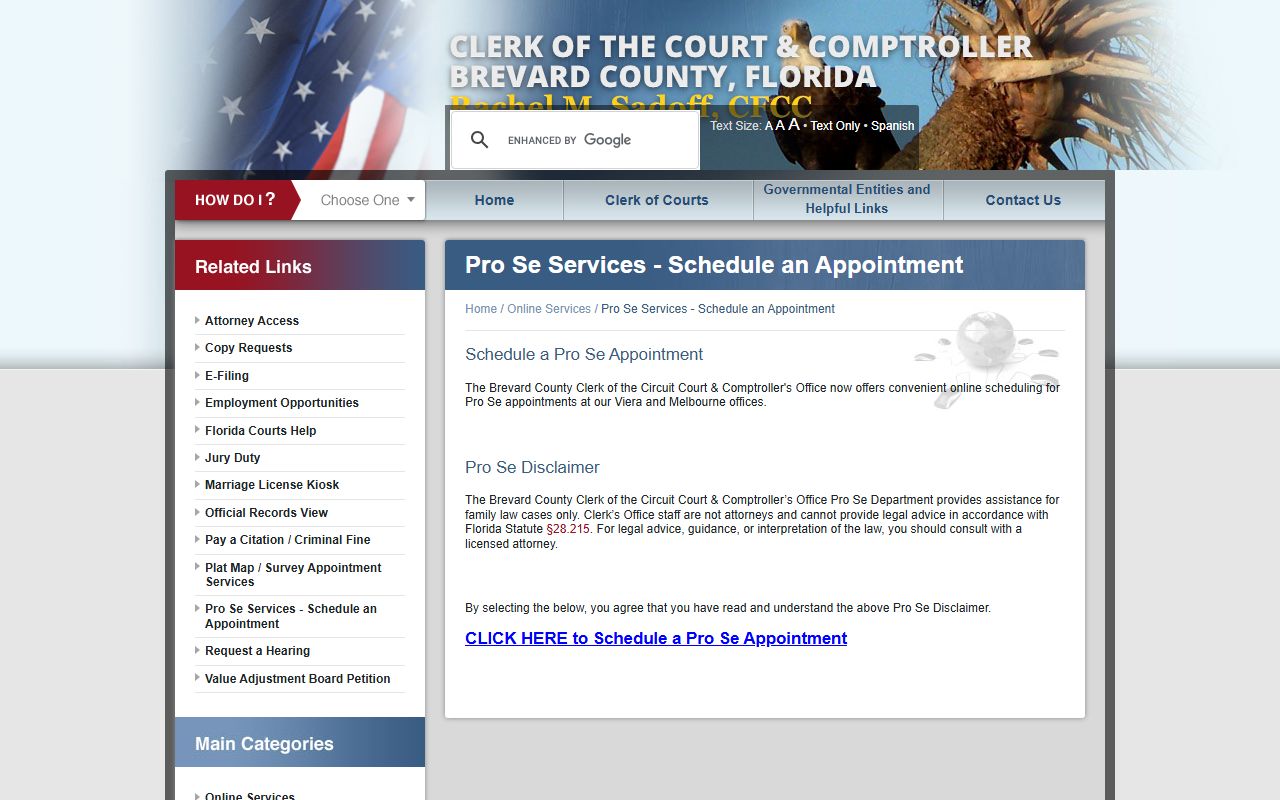
That page sits behind the answer on self-represented litigants and on what Clerk staff can and cannot do.
For appointed counsel and the first-appearance rules, see the official site of the Public Defender for the Eighteenth Judicial Circuit.
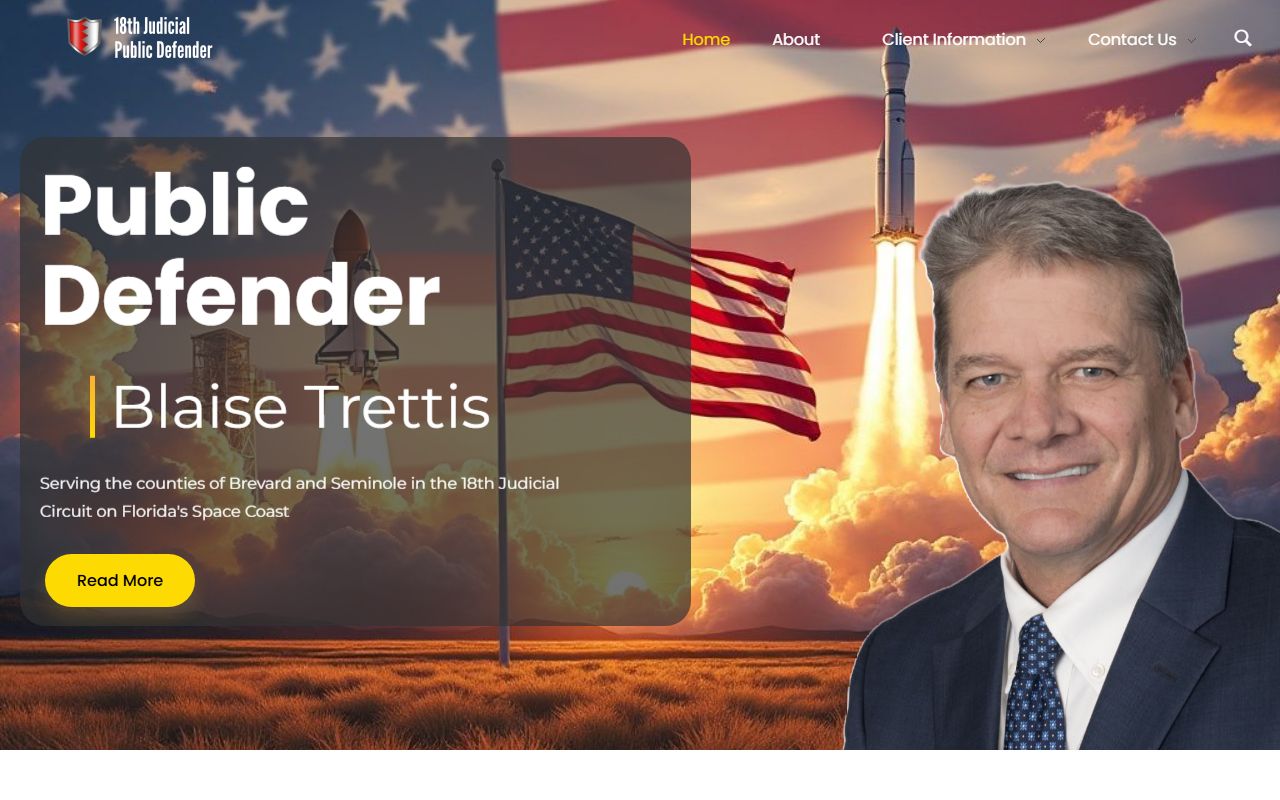
That homepage backs the Q on who the Brevard Public Defender is and on how appointment works.
The Public Defender's client information page explains the financial inquiry, the $50 application fee, and what to expect at first appearance.
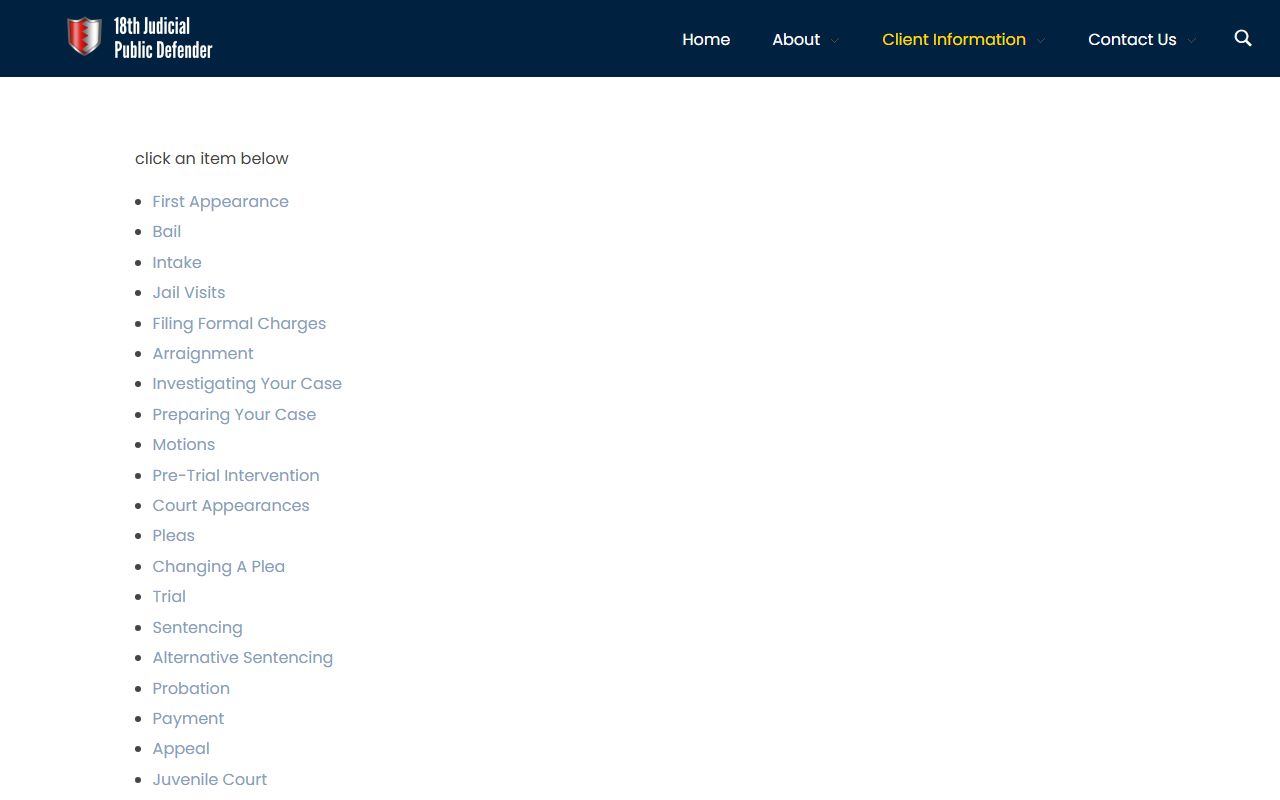
That page is the source for the fee number and the seven-day Clerk payment window.
For civil legal help outside criminal court, the official Brevard County Legal Aid site lists practice areas and intake rules.
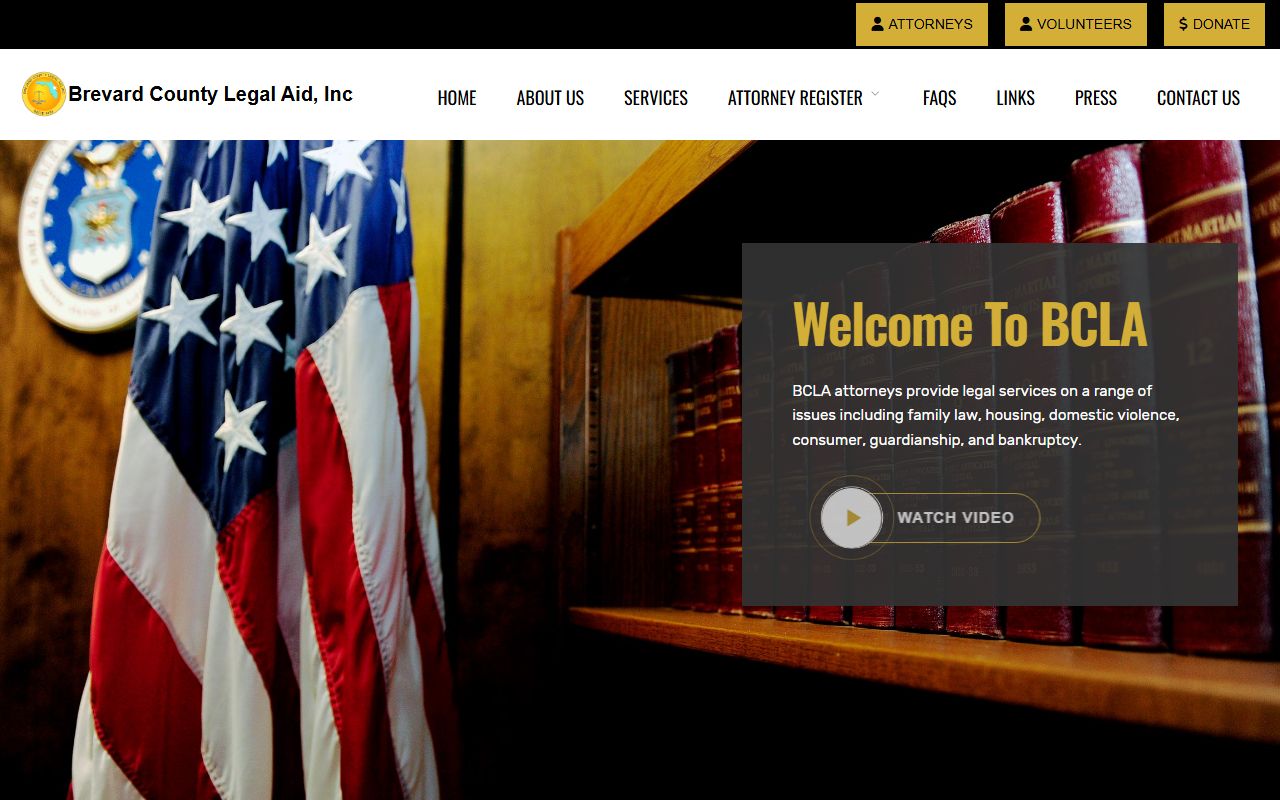
Brevard County Legal Aid handles family, housing, domestic violence, guardianship, consumer, bankruptcy, and landlord-tenant cases for financially eligible clients.
For seal and expunge questions, FDLE's seal and expunge FAQ covers the Certificate of Eligibility process and the typical 12-plus week timeline.
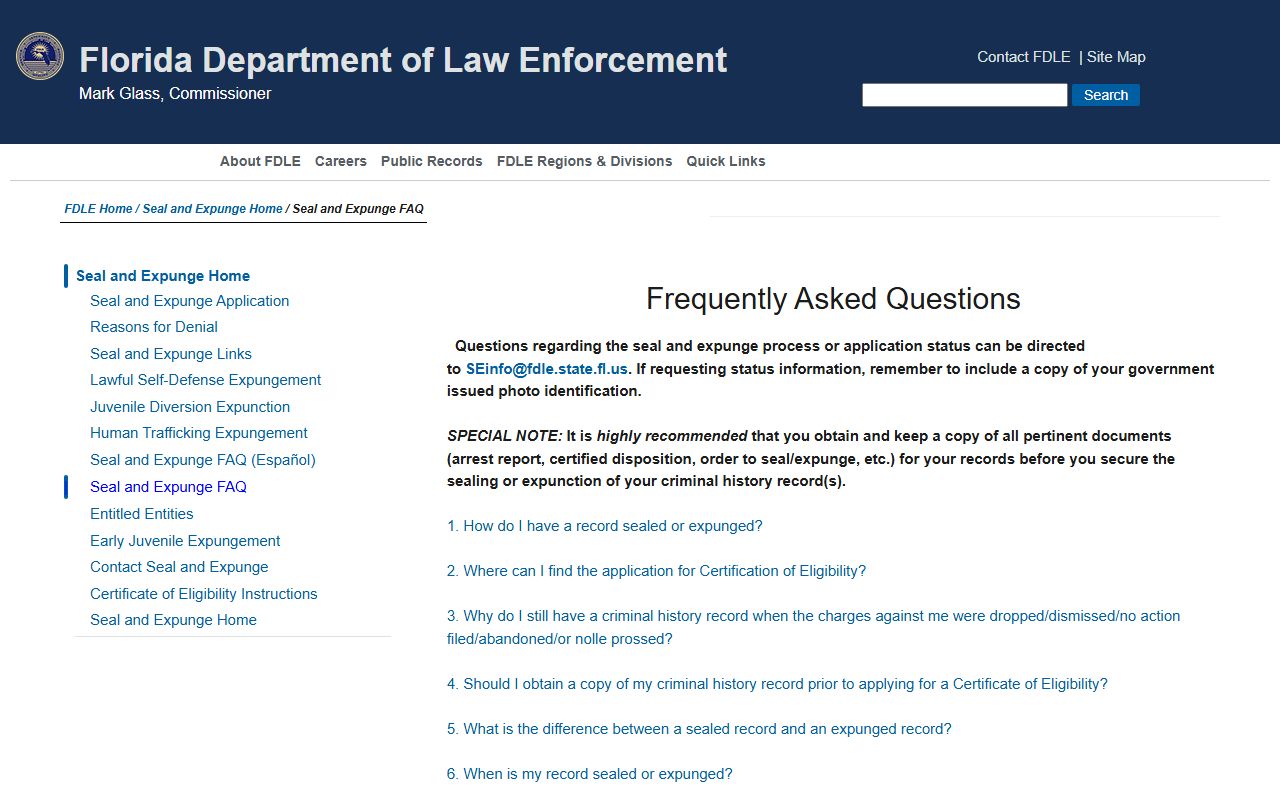
FDLE's FAQ is the source for the eligibility and processing-time notes in the seal and expunge answer above.
Where to Get Help in Person
Two offices handle most direct questions from the public. One is the Clerk's Pro Se appointment program for family-law filers. The other is Brevard County Legal Aid for civil cases when the filer is financially eligible.
Clerk Pro Se Services
Brevard Clerk of the Circuit Court & Comptroller
Pro Se family-law appointments at Viera and Melbourne
Booking page: brevardclerk.us pro-se services
Main phone: (321) 637-2004
Note: Clerk staff cannot give legal advice under F.S. 28.215.
Brevard County Legal Aid
Brevard County Legal Aid, Inc.
Official site: brevardcountylegalaid.org
Statewide forms hub: floridalawhelp.org
Areas: family, housing, domestic violence, guardianship, consumer, bankruptcy, landlord-tenant.
Service is for financially eligible clients only.
Still Have Questions?
For the right office, see Clerk of the Circuit Court & Comptroller. For the broader access rules, see public records. To browse by topic, try court records, criminal records, inmate records, warrant records, marriage and divorce, probate records, traffic court records, or the circuit court and county court pages.